

Construction Projects Get Delayed?
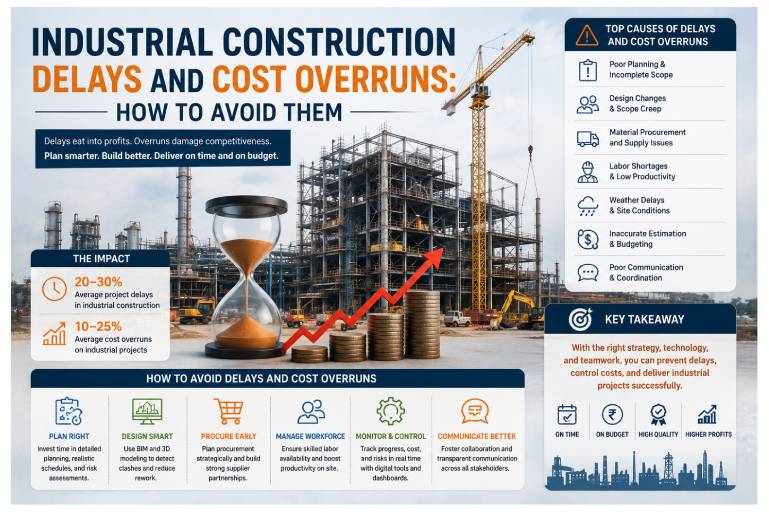
Construction delays can happen for several reasons. Poor project planning, design changes, material shortages, approval delays, unexpected site conditions, and coordination problems between contractors are some of the most common causes.
One major issue is starting construction before the design and technical requirements are fully finalized. Changes made during construction can lead to rework, additional material requirements, and labor costs. Delays can also occur when materials are not ordered on time or when suppliers fail to meet delivery schedules.
Weather conditions, site accessibility, regulatory approvals, and unforeseen ground conditions may create additional challenges. Without proper contingency planning, these issues can quickly affect the project completion date.
How Cost Overruns Occur
Cost overruns occur when the actual project expenditure exceeds the original budget. While some cost changes are unavoidable, many can be reduced through careful planning.
Unclear project specifications, inaccurate quantity estimates, fluctuating material prices, design modifications, inefficient labor utilization, and construction rework can all increase expenses. Choosing materials or systems based only on their initial purchase price can also result in higher maintenance and operating costs later.
A detailed budget should therefore consider not only construction costs but also transportation, installation, equipment, utilities, approvals, testing, contingencies, and future maintenance requirements.
Importance of Detailed Planning
The best way to prevent delays and unexpected expenses is to invest time in planning before construction begins. A well-prepared project plan should define the scope of work, design requirements, construction schedule, budget, responsibilities, material specifications, and quality standards.
Site surveys and feasibility assessments should be completed before major construction activities begin. This helps identify potential challenges related to soil conditions, drainage, access, utilities, and site logistics.
A realistic construction schedule should also include appropriate time for procurement, approvals, inspections, testing, and possible contingencies.
Choose the Right Industrial Construction Partner
The experience and capabilities of the construction partner can have a significant impact on project performance. An experienced industrial construction company understands the importance of coordination between structural, architectural, electrical, mechanical, and other project requirements.
At Steelion Building Solution, a systematic approach to industrial construction helps clients manage important project considerations from planning and design through execution. Clear communication, coordinated execution, quality control, and timely procurement can help minimize unnecessary delays and additional costs.
Better Procurement and Material Management
Material procurement is another critical factor in maintaining project timelines. Long-lead materials should be identified early and ordered according to the construction schedule. Proper vendor selection and quality checks can reduce the risk of receiving incorrect or substandard materials.
Maintaining an organized procurement schedule also helps ensure that materials reach the site when they are actually required. This reduces downtime, storage issues, and interruptions to construction activities.
Regular Monitoring and Communication
Construction projects require continuous monitoring. Regular progress meetings, site inspections, budget reviews, and schedule updates can help identify problems before they become major issues.
Digital project tracking and clear documentation can further improve communication between clients, engineers, contractors, suppliers, and site teams. When everyone understands their responsibilities and deadlines, decisions can be made faster and project risks can be controlled more effectively.
Conclusion
Industrial construction delays and cost overruns can have a major impact on business operations and investment returns. However, many common problems can be minimized through accurate planning, realistic budgeting, reliable procurement, experienced execution, and continuous project monitoring.
Choosing the right construction partner and addressing potential risks before they affect the project can make a significant difference. With a structured approach to industrial construction, Steelion Building Solution aims to help businesses achieve projects that are efficient, reliable, cost-conscious, and aligned with their operational requirements.