

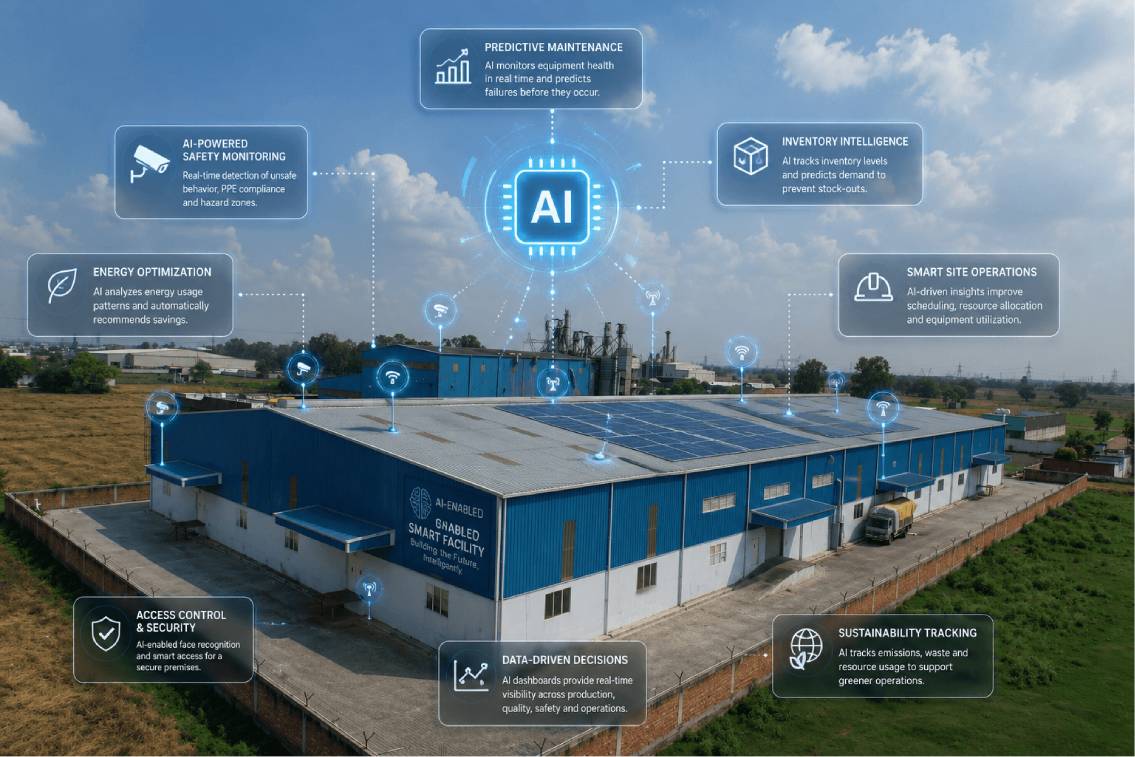
- Design & Engineering: AI helps optimize PEB structures, steel member sizing, connections, and layouts, reducing material usage and design time.
- Automated BIM & 3D Modeling: AI-assisted BIM tools can detect design clashes and coordinate structural, architectural, and MEP components before fabrication.
- Production Planning: AI supports automated nesting, cutting optimization, CNC production planning, and material utilization in prefab factories.
- Quality Control: Computer vision can inspect welding, bolting, surface defects, dimensions, and fabrication quality.
- Project Scheduling: AI predicts delays, optimizes manpower and equipment allocation, and improves fabrication-to-site sequencing.
- Material & Inventory Management: AI forecasts material requirements and helps reduce excess steel, panels, fasteners, and other inventory.
- Site Monitoring & Safety: AI-based cameras and drones can monitor erection progress, worker safety, PPE compliance, and site conditions.
- Cost Estimation: AI can analyze drawings, quantities, historical projects, and material prices to improve BOQs and cost estimates.
- Predictive Maintenance: AI can predict maintenance requirements for fabrication machinery, cranes, welding equipment, and other plant assets.
In the PEB and prefab industry, AI is mainly being used to improve design optimization, material efficiency, factory automation, quality inspection, project scheduling, cost control, and site safety, making construction faster, more predictable, and less wasteful.